
Fire Retardant Chemicals
Nano-particle fire-retardant chemistry for ply boards, doors, particle boards and MDF — by dipping, glue-mixing or coating.
Why it matters
- Improves fire-retardant performance, including flammability, flame penetration and rate of burning
- Helps meet IS 5509 requirements for fire-retardant plywood
- Provides effective fire resistance without compromising plywood bonding strength
Next-Generation Nano-Particle Fire Retardant Chemicals
Comprehensive Fire Protection for Ply Boards, Doors, Particle Boards, and MDF
Fire-rated panels are increasingly specified for doors, interiors and public buildings, but retardant chemistry only earns its place if it protects effectively without wrecking economics. The FRM range covers every route to a fire-rated board — core dipping, glue-line mixing and surface coating — so mills can match the method to the product.
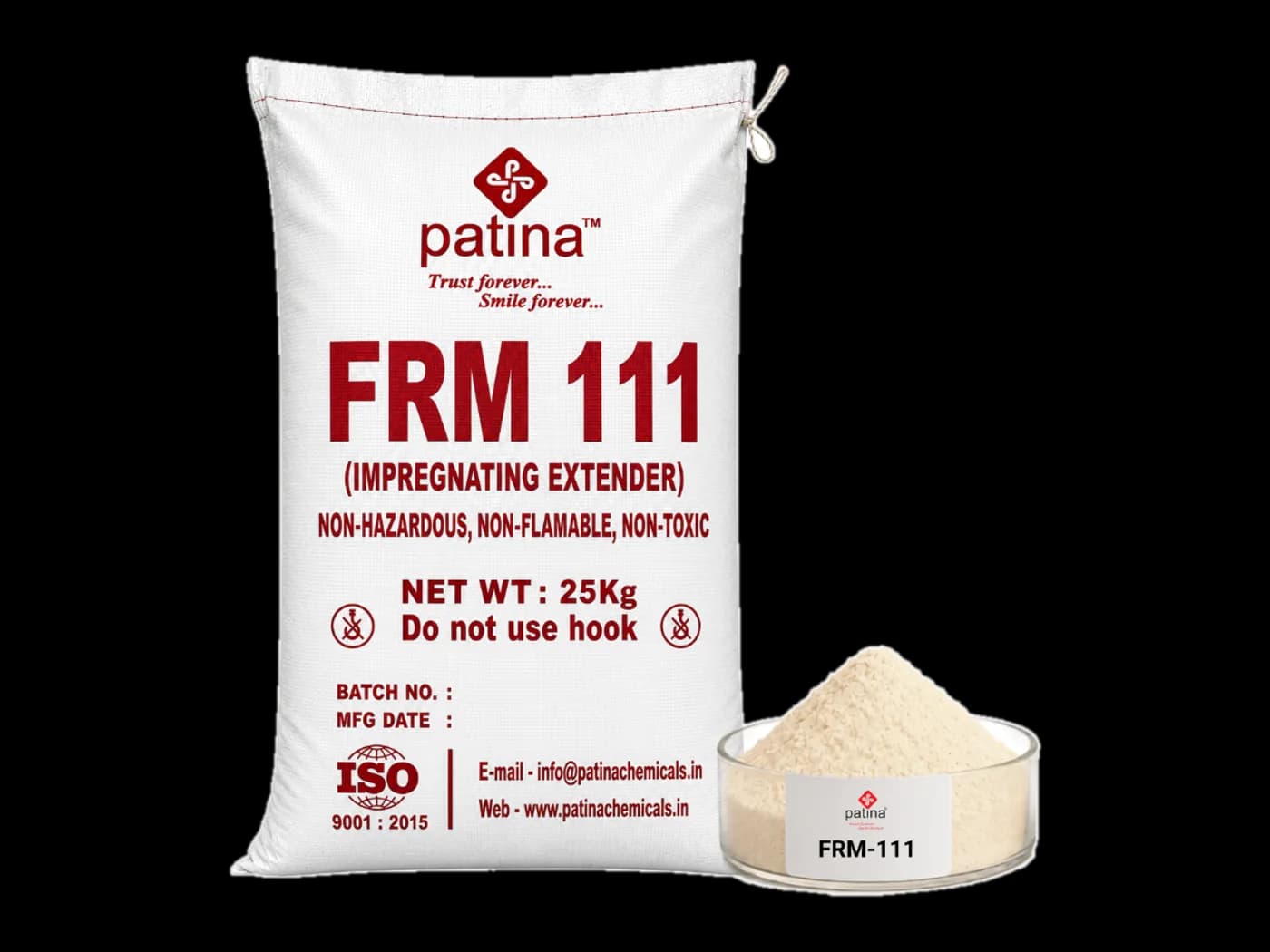
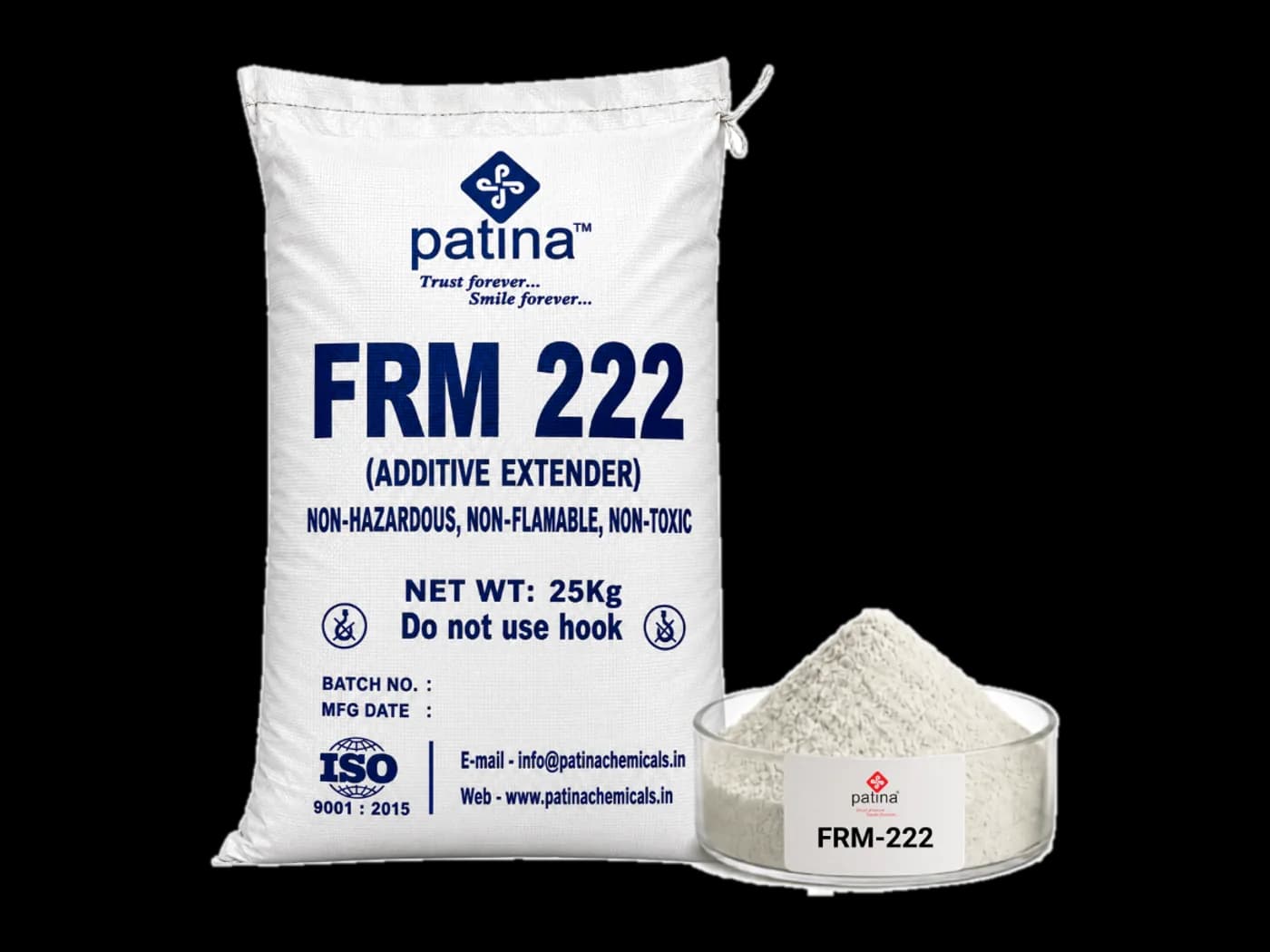
FRM-111 is a water-soluble core dip (5% solution) that carries protection deep into the veneer and raises its ignition threshold. FRM-222 mixes straight into the liquid glue at 3–4% and travels through the adhesive matrix into every pore, while also cutting lethal smoke and toxic-gas output. FRM-333 is an intumescent 50% EC polyphosphate coating for finished plywood and heavy-duty doors, applied with standard preservative dips at 2–3%.
Across all three, cost impact is deliberately held low — hardly 1% for FRM-222 and under 2% for FRM-333 — so fire-rated production stays profitable at scale.
Research report
Fire-retardancy test report — FRM-111, FRM-222 & FRM-333
Independently issued by IWST Kolkata, Indian Council of Forestry Research & Education.
Tested to IS 5509:2000
Grades in this range
Core Dipping Fire Retardant Chemical
- Physical form
- Light grey powder.
- Application method
- A completely water-soluble treatment — a 5% aqueous solution achieves profound fire-retardant properties deep within the wood core.
- Combustion mechanism
- Slows the combustion process and raises the ignition threshold of the treated veneer.
- Economic impact
- A very nominal cost addition, making mass production of fire-rated interior plywood feasible and profitable.
Fire Retardant Additive
- Physical form
- Light grey powder.
- Application method
- Mixed directly with the liquid glue — only 3–4% of the total resin quantity is required.
- Penetration & efficacy
- Reaches every microscopic pore of the veneer through the adhesive matrix, drastically increasing the retardant property of the panel.
- Safety profile
- Reduces base flammability and contains compounds that actively minimise lethal smoke and toxic gases during a severe fire.
- Economic impact
- Extreme cost-efficiency — total cost impact on the final product is exceptionally low (hardly 1%).
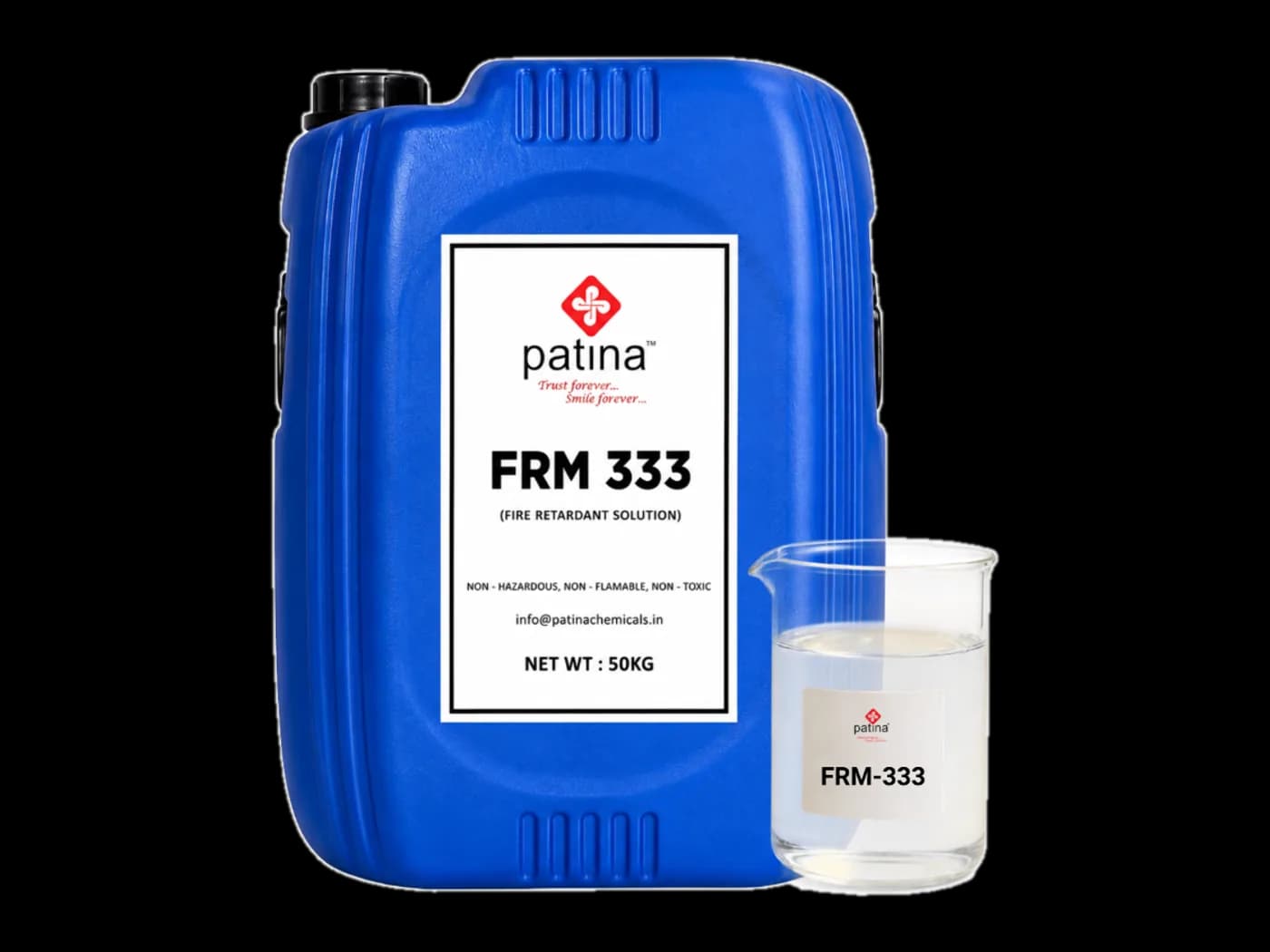
Fire Retardant Coating
- Physical form
- Pale straw-coloured, near-clear liquid.
- Chemical composition
- A highly advanced 50% EC organic polyphosphate-based liquid solution.
- Target products
- External coating and treatment of finished plywood and heavy-duty doors.
- Application method
- Mixed with standard wood preservative solutions — only 2–3% concentration in the dipping solution massively increases fire-retardant properties.
- Combustion mechanism
- Uses intumescent mechanisms to inhibit the surface spread of flames across the panel.
- Economic impact
- Keeps the cost factor for premium fire resistance within highly profitable limits (<2%).
Where it goes to work
Putting FRM Series on the line.
Interior fire-rated plywood (FRM-111)
Core-dip protection for mass-produced fire-rated interior ply.
In-glue protection (FRM-222)
Whole-panel retardancy plus smoke and toxic-gas suppression, mixed into the glue.
Finished doors & panels (FRM-333)
Intumescent surface coating for finished plywood and heavy-duty doors.
Questions
About Fire Retardant Chemicals.
FRM-111 for core dipping, FRM-222 for mixing into the glue, and FRM-333 for coating finished boards and doors.
It is kept within profitable limits — around 1% for FRM-222 and under 2% for FRM-333.
Yes — FRM-222 contains compounds that actively minimise lethal smoke and toxic gases in a severe fire.
Explore the range
More Patina chemistry.
Discuss your production goal
Not sure which grade fits your line?
Tell us your resin system, press cycle and the target you need to hit — we’ll recommend the right product and a starting dose.
How we work